
Quality of movement
Quality of movement is a complex notion, which I’d like to consider here from these three aspects:
1. Movement which is healthy. I’m talking here about movement in terms of ranges of motion, directions, capacity of tissues, about proper weights, movement which helps us stay healthy.
This fist aspect refers to the pure mechanics of movement and health of joints, bones, muscles and fascial tissue. Every human’s anatomy is a bit different (e.g. larger or smaller diameter of one’s spine, deeper or shallower acetabulum), and that’s why we all have slightly different movement patterns which will be best for us, although of course our joints allow only specifically directed movement. Taking this into consideration, it would be sensible to use one’s locomotor system in an anatomically justified way. We can expand our range of motion, or the strength of our tissues, but any kind of movement we’re forcing on our body should be healthy. Unfortunately, it often is the opposite.
In the above understanding, for me, the quality of movement means retaining the healthiest ranges and directions of bodily movement for the given individual. It also means ensuring that we’re using mainly these muscle groups, the main function of which involves the task our body faces in the situation we’re in – be it running, lifting, tying our shoes, jumping, reaching for something, or dancing. What is more, when we’re moving in directions natural to us, the motion becomes easier and more harmonious, since we’re not fighting our own body.
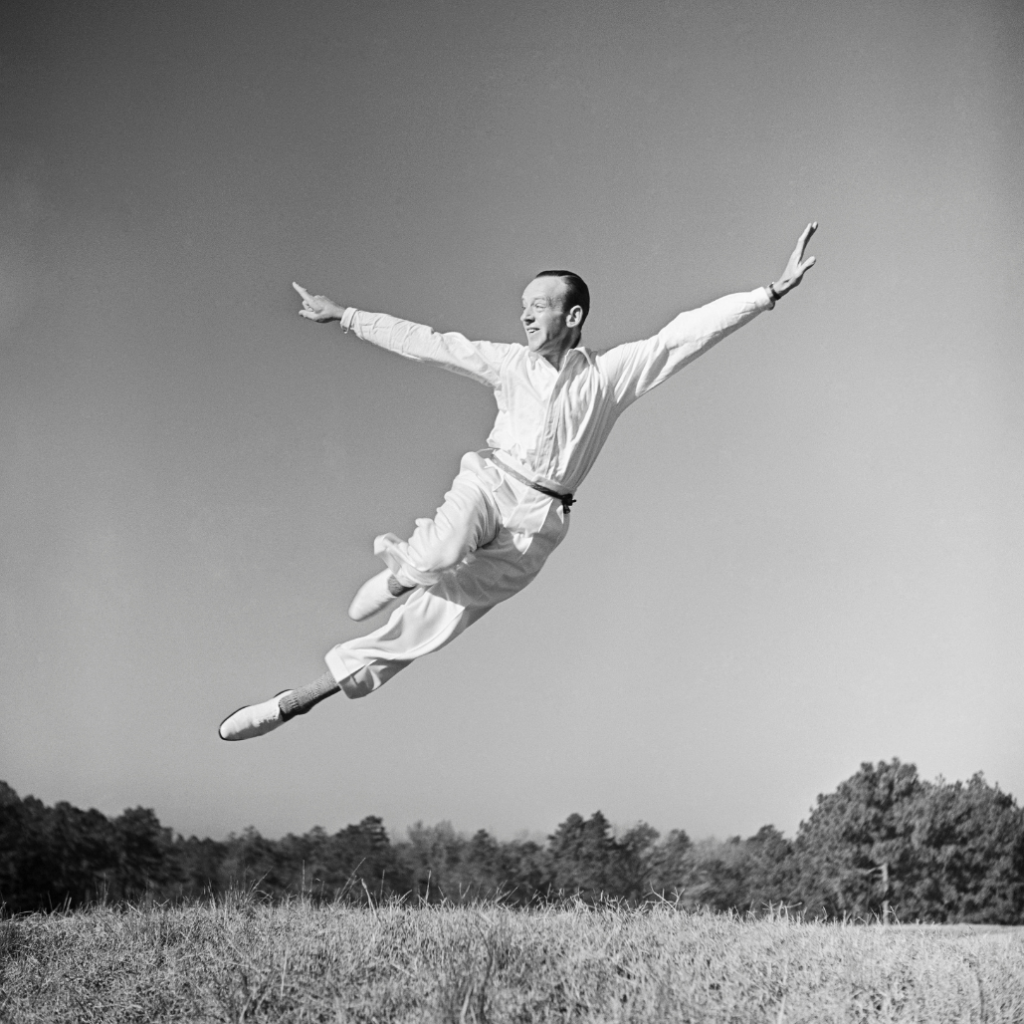
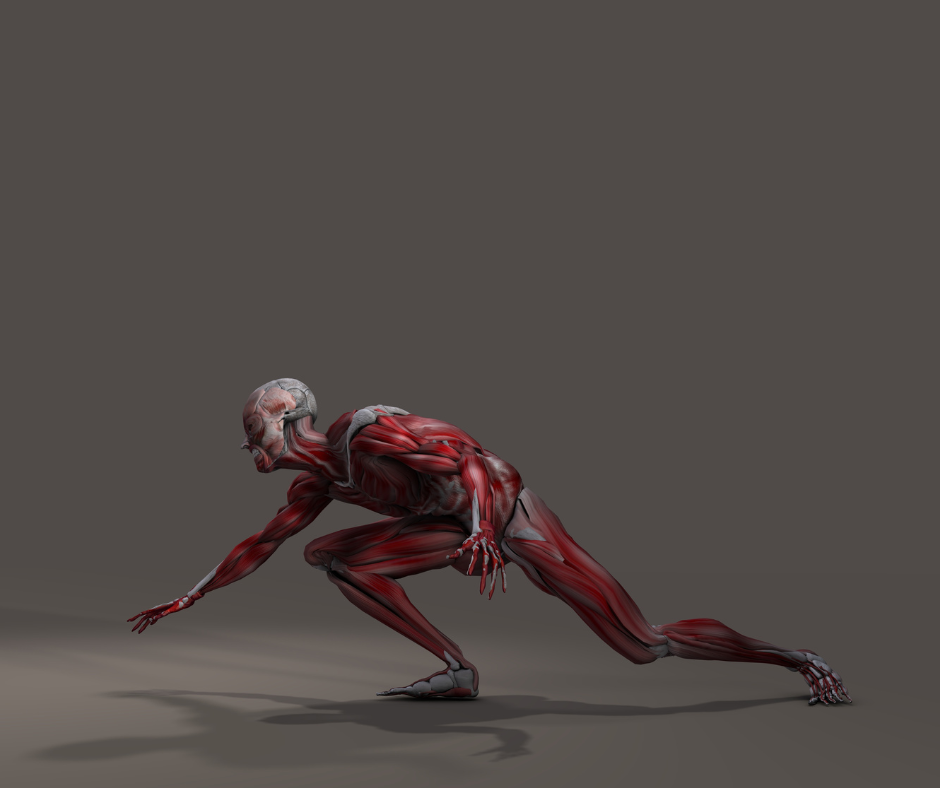
2. The quality of movement engrams, or the patterns our nervous system uses to activate our body for the particular activity. These patterns should be as efficient as possible, and the whole locomotor system should work in full cooperation.
Your body is a tensegrity structure. It means that none of your tissues work in isolation: tensions from one side of your body shift to the other side both with the use of anatomy trains and crosswise to the given force. The active muscle affects its attachments and shifts the tensions to the surrounding tissues, which willy-nilly take part in the given movement. Among other things this is the reason why a total isolation of one muscle is practically impossible, although it can happen that only one is dominant in an exercise.
Studying movement in terms of its quality, there is no sense in isolating a given body part, and instead, we should focus on how our body cooperates in the given move, and how it is activated by our nervous system, and especially whether:
- our patterns are as efficient as possible,
- we can disperse the force acting on us on a larger surface of our body, thus making our motion more harmonious,
- the activation which follows is feasibly most effective depending on the activity,
- it can coordinate multi-joint movement in the most efficient way.
If our whole body cooperates and the nervous system can activate what’s essential for the greatest efficiency possible, every move will be easier and more harmonious. It also means that our nervous system can activate muscles and fascia on various levels, which involves being able to use our body with the exact pressure required.
3. Nature of movement
In this aspect, we’re broaching the topic of movement artistry, that is, whether we can execute the motion in a very precise way, and it’s not just about moving from point A to point B in the right direction, within the healthy ranges, with the right strength or force. It’s about the intent of our move:
- whether our nervous system can use our body in the exact way we want,
- whether e.g. we can make the move heavy or light, sharp or smooth, staccato or legato.
It means that we have deliberate control over what I’ve been writing about in point 2:
- that we can deliberately execute a move of the given intent or nature in the most natural and effective way,
- that we can use our body very forcefully as well as subtly and finely,
- we can feel how our body reacts when the signal we’re sending via our nervous system is very strong, but we also know that our body will “hear” us and listen to a signal as delicate as a whisper. What’s important here is the ability to quickly shift from one tension level to another in a very deliberate way (e.g. activating our body very forcefully and then loosening it in an instant)
- our nervous system can collect even the smallest snippets of information for us, then our brain can interpret them correctly, and send a very precise activation signal to execute the move in the exact way we want.
Whether we possess these abilities is tightly connected to our experience, the movement engrams we’ve learned in the course of our lives, what the given move’s intention means to our nervous system/brain. That is why (and not only due to the fact that our movement range is not sufficient or our body is too weak) some of us may find it more difficult than others to obtain a higher movement quality level, however, every one of us can get there!
On my path, I’ve often met dancers who trained too much, but had poorer results than they should. They were strong, with full ranges of movement, but their movement quality left much to be desired. They could not improve it by standard training methods, even the very intensive ones. In such situations neurotraining comes to the rescue. The brain remains neuroplastic all the time, and is in the state of constant flux. The neuron activation pathways change all the time, so with proper training, we can alter our movements by a great deal – sometimes we just need a little more patience and commitment for ourselves and our bodies.


To sum up, in my opinion, the quality of movement is the answer to the question HOW my body executes a given move (e.g. a squat, a West Coast Swing triple step, a Cha Cha chasse) and not what move it executes. In other words, I want to control e.g. how I walk (briskly or stomping heavily, strenuously or in leaps and bounds), and not only that I walk from one place to another on foot.
Analysing the needs of a given person in order to achieve the quality of movement and the quality in itself is the area of my biggest interest. The more I explore this topic, the more fascinating it seems for me, especially since researchers are still discovering more and more elements of this awe-inspiring puzzle which is our body, which used to be such an uncanny mystery not so long ago.
I’m very intrigued how our understanding of the body will expand in the course of the next, let’s say, 20 years – and I especially have the intricacies of the nervous system in mind. Neurotraining is something that can facilitate the improvement of one’s life in case of various ailments, and in the context of dance, it’s going to play a big part in enabling anyone to interpret the music per one’s own impressions and making sure our body is there to aid and not hinder it.
Truly ANYONE can attain good movement quality with the proper training and commitment!
Good luck!
