Movement and health
To rephrase the popular idiom, an exercise a day keeps the doctor away. This is a well-known belief, held by many as the universal truth. And yet to be healthy, any kind of workout needs to be… exactly it: healthy, and that means: correct, right for our organism, and supported with some time for regeneration and adaptation.
Let’s consider top-level professional sports for a moment. We need to understand that enhancing our body’s ability to be able to perform on such a level and for instance compete at the Olympics, we’ll always need to negotiate between health and our desire to win. Even though the best athletes and their coaches plan their training with the aim of remaining healthy and in shape for many years, and never concentrate their efforts on beating only one record per a lifetime, still, top-level competitive sports will always entail some kind of risk and sacrifice.
When it comes to sport/physical activity (including dance) on an amateur or semi-professional level, this is the best solution to enjoy good health for long – as long as we know what we need to pay attention to, or we have a personal trainer who will take care of this for us. The problem with the latter is that we’ll only know whether they are doing a job and helping us avoid any injuries after a period of time – and usually too late… I know the issue from my own experience, and that’s how I came up with the idea of physical activity education: I don’t want any of you to make the same mistakes that I did.

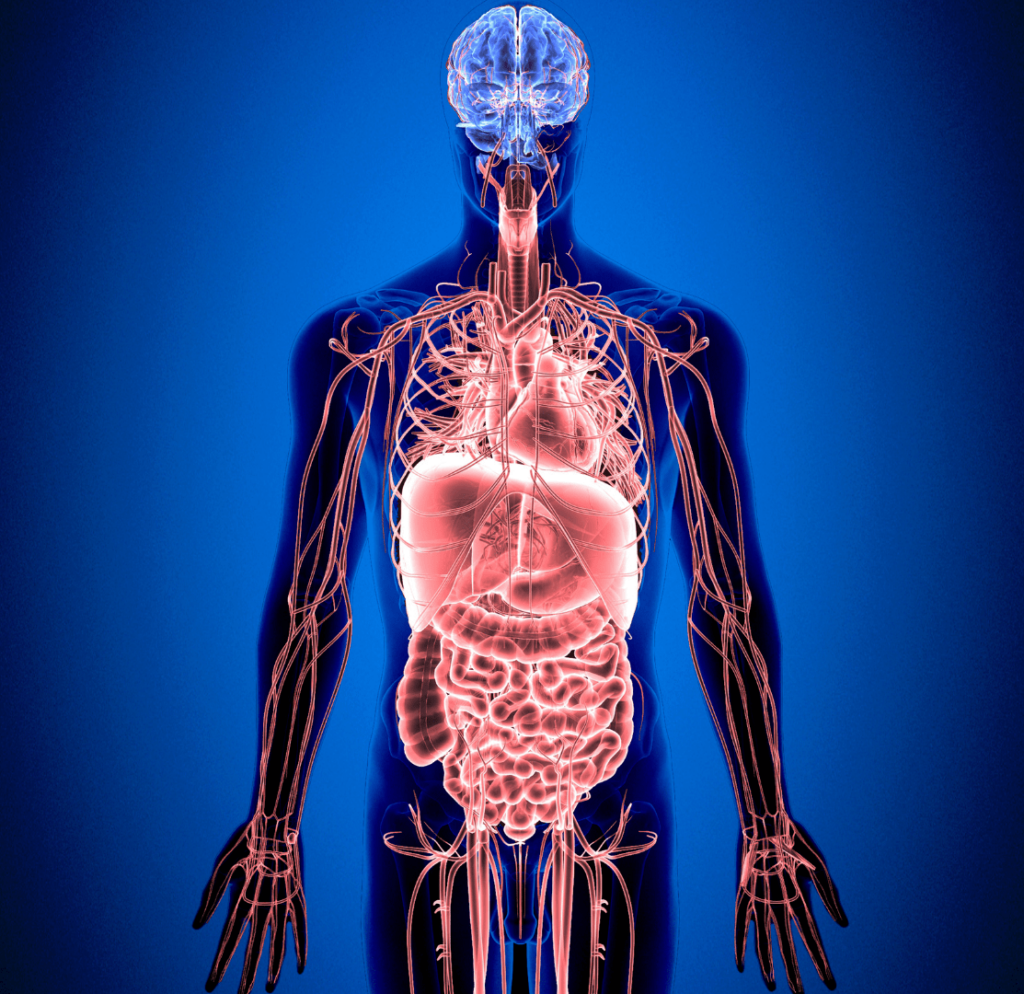
Thinking about exercise, we usually conjure the image of working muscles, while actually, moving around activates a considerable number of other elements of this complicated puzzle called our organism.
- The nervous system
The relationship between movement and the nervous system is bilateral. On the one hand, everything we do is a consequence of the nervous system’s activity, and on the other, our brain is neuroplastic (changes all the time) and that is why physical activity (including breathing) is a perfect tool for activating various areas and functions of our brain, as well as the whole nervous system, and, as a result, directing the changes they undergo as we’d like.
Our sight, balance system, proprioception (perception of our own body, for example sensing the arrangement of your limbs without looking at them) and other factors our mind needs to interpret in order to execute the given action – all of those take part in movement execution and can be improved given proper training.
- The blood circulation system
Moving our body makes our heart work faster, increases blood pressure and amplifies the amount of nutrients carried to our body’s tissues, including oxygen (more about this process in my article about breath). After a period of proper training our heart starts beating steadier, and, as every other muscle, becomes more trained and capable. This means that physical activity can significantly boost our blood circulation system’s efficiency.
- The lymphatic system
Without a pump such as the one our blood circulation system has, the heart, the lymphatic system is very dependent on our physical activity, or (in extremely simplified terms) on the contractions of our muscles, which help push our lymph forward. On the other hand, our health and immunity is dependent on the functioning of our lymphatic system.
- The respiratory system
In order to breathe in, we need a pressure difference, and it is our diaphragm and the accessory inspiratory muscles which are responsible for that exact pressure. A well-thought-out training with proper breathing, or just breathing exercises alone can facilitate our organism’s functioning on many levels: biomechanical, biochemical and psychophysiological.
We’re taking many thousands of breaths a day, and with proper breath work and training, breath can become a powerful tool for elevating our abilities to the next level.
- The fascial and musculoskeletal systems
Physical activity, as long as it’s properly planned and dosed, strengthens, rebuilds, elasticises and improves the functioning of almost all of our tissues. It’s worth remembering though that it’s the dose that makes the poison. Our body reacts strongly to any mechanical loading it undergoes and adapts to it. If we do not take any exercise and spend all time sitting down, we start losing muscles, and our tissues begin to adapt to our body’s most frequent position (some contract, some unnecessarily stretch), our bones weaken, and our fascial structure becomes more chaotic – it all leads to our body becoming worse at shifting loading. Fortunately, our body’s adaptive qualities can also be used in the opposite direction, and for our advantage. We’ll be able to achieve this only if we make sure we take proper, healthy exercise.
- The endocrine system
Physical activity can improve our hormonal system, but there are many influencing factors and it’s easy to upset the proper balance (especially in women), for example with too much exercise, so it’s worth consulting a good dietician and endocrinologist. A good idea is to consult proactively, e.g. during a period of high-intensity training, and not reactively, after something bad has already happened to our body.
- The mind
A well-planned training session on the individually-appropriate intensity level releases the so-called happiness hormones, which contribute to keeping a good mood and thinking positively. This later translates to our posture, biomechanics and, basically, the overall functioning of our organism.
Human evolution vs the development of civilization
Our bodies are made to be moved. Not so long ago, we were much more active physically as a species than now, when the sedentary lifestyle has become one of the diseases of civilization. In the morning, we sit down for breakfast, then we sit in the car on our daily commute, and the majority of us work in front of a computer. After work we like to sit in front of the tv screen (or – in a slightly better scenario – we sit with a book). Even if we go to the cinema or meet our friends, we usually end up just sitting some more. Then we go to sleep and it all plays on repeat. Our civilization has developed too fast and the evolution of our bodies definitely can’t keep up.
As a little child, every one of us felt the natural desire to move, but as soon as we sat down at a school desk, we started our journey towards an increasingly sedentary lifestyle. As I already mentioned in point 5 above, our organism tends to easily adapt to the tasks at hand, and when the task is sitting down, this adaptive quality of our bodies puts us at a disadvantage.
How can we help ourselves?
The whole process of “deteriorating” can be reversed at any age, however, if we want to take care of our body responsibly, it’s extremely important to find out HOW we should move to be able to enjoy good health for long. Education is fundamental here.